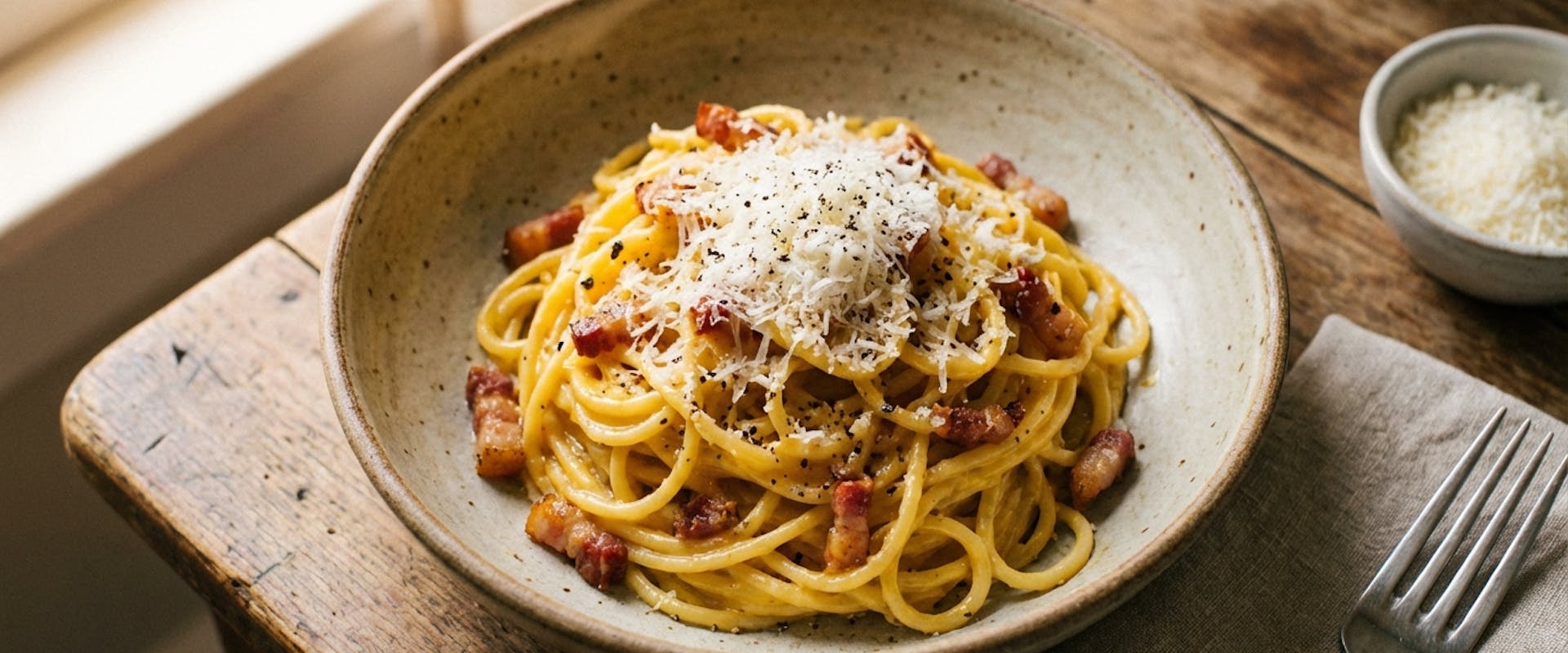

Spaghetti Carbonara: Rome's Ultimate Comfort Pasta with Extra Pancetta and Pecorino
The sizzle of cured pork hitting a hot pan. The whisper of steam rising from freshly drained pasta. The golden cascade of egg and cheese emulsifying into silk. This is carbonara—Rome's most seductive pasta, and perhaps the most misunderstood dish in Italian cuisine.
The Truth About Authentic Carbonara
Let me be clear from the start: authentic carbonara contains no cream. None. Zero. The creamy texture comes entirely from the emulsion of egg yolks, rendered pork fat, starchy pasta water, and aged cheese. Adding cream isn't just inauthentic—it's unnecessary when you master the technique.
In Rome's Testaccio neighborhood, where carbonara is said to have originated among the workers of the slaughterhouse district, I watched a third-generation cook prepare dozens of portions in a single evening. Not once did she reach for cream.
"The eggs do the work," she explained, never breaking her rhythm. "You just have to trust them."
The Pancetta vs. Guanciale Debate
Traditional Roman carbonara uses guanciale—cured pork jowl with a delicate, melt-in-your-mouth fat. But excellent carbonara can be made with quality pancetta, which is more widely available and offers its own merits: a slightly meatier texture and more consistent fat-to-meat ratio.
For this recipe, we're embracing pancetta with extra generosity. Where most recipes call for 100-150 grams, we're using 200 grams for two servings. This isn't excess—it's intention. More pancetta means more rendered fat for the sauce and more crispy, savory bites throughout.
The Extra-Indulgent Carbonara Recipe
Ingredients (Serves 2 Generously)
For the pasta:
- 200g spaghetti or rigatoni
- Generous salt for pasta water
For the sauce:
- 200g pancetta, cut into small cubes or strips
- 3 large egg yolks plus 1 whole egg
- 80g Pecorino Romano DOP, finely grated (plus extra for serving)
- 30g Parmigiano-Reggiano, finely grated
- Freshly cracked black pepper (generous amount)
- Reserved pasta water
The Method: Step by Step
Step 1: Prepare Your Mise en Place
Before you begin cooking, have everything ready. Carbonara moves fast at the end, and hesitation leads to scrambled eggs.
Cut the pancetta into small cubes—about 1cm pieces. Grate both cheeses finely using a Microplane or the smallest holes of a box grater. Crack your eggs into a bowl: three yolks and one whole egg. Add the grated cheeses and a very generous amount of freshly cracked black pepper. Whisk until combined into a thick, golden paste.
Step 2: Render the Pancetta
Place the pancetta cubes in a cold, large skillet. This is important—starting cold allows the fat to render slowly without burning the meat.
Turn the heat to medium and cook, stirring occasionally, for 8-10 minutes. The pancetta should be golden and crispy at the edges, sitting in a pool of its own rendered fat. Turn off the heat once done.
Step 3: Cook the Pasta
Bring a large pot of water to a rolling boil. Salt it generously—it should taste like the sea. Add the spaghetti and cook until just shy of al dente, about one minute less than the package directions.
Before draining, reserve at least one full cup of pasta cooking water. This starchy liquid is essential for the sauce.
Step 4: The Critical Moment
This is where carbonara is made or broken.
Using tongs, transfer the pasta directly from the pot to the skillet with the pancetta. Bring some pasta water along with it. Toss to coat the pasta in the rendered fat.
Now, remove the skillet from the heat completely. Wait 30 seconds—this is crucial. The pan needs to cool slightly so the eggs thicken into a sauce rather than scramble.
Pour the egg and cheese mixture over the pasta. Toss vigorously and constantly, adding splashes of pasta water as needed. The sauce should become silky, glossy, and coat every strand. It should never look watery or, conversely, clumpy.
Step 5: Serve Immediately
Carbonara waits for no one. Divide between warm bowls, finish with extra grated pecorino and more black pepper. Serve instantly.
Understanding the Science
The magic of carbonara lies in emulsion. Egg yolks contain lecithin, a natural emulsifier that allows fat and water to combine into a stable, creamy sauce. The starch from pasta water helps thicken and stabilize this emulsion further.
Temperature control is everything. Between 65-70°C (149-158°F), egg yolks thicken beautifully without coagulating. Above 80°C (176°F), they scramble. This is why we remove the pan from heat before adding the egg mixture—residual heat is gentler and more controllable.
Common Carbonara Mistakes
Adding eggs to a hot pan: The number one cause of scrambled carbonara. Always work off the heat and let the pan cool slightly.
Skipping the pasta water: That starchy liquid is not optional. It's essential for achieving the right consistency.
Using pre-grated cheese: Pre-grated cheese contains anti-caking agents that prevent proper melting. Always grate fresh.
Being stingy with pepper: Black pepper isn't just a garnish in carbonara—it's a primary flavor component. Use more than you think you need.
Letting it sit: Carbonara thickens as it cools. Serve immediately, eat quickly.
The Best Carbonara in Rome
If you find yourself in Rome, these spots serve exceptional carbonara:
Roscioli Salumeria - Their carbonara uses guanciale from their own curing program. The pasta arrives at the table still glistening.
Da Enzo al 29 - A tiny Trastevere trattoria where the carbonara is textbook perfect—silky, peppery, indulgent.
Felice a Testaccio - Famous for cacio e pepe, but their carbonara rivals it. The egg sauce is prepared tableside for maximum drama.
Wine Pairing
Carbonara's rich, fatty character calls for wines with good acidity to cut through. A Frascati Superiore from the hills outside Rome is traditional. For red, try a young, fresh Cesanese del Piglio—it's local to Lazio and has the acidity to balance the dish.
The Comfort of Carbonara
There's a reason carbonara has conquered the world. It's the ultimate comfort food—rich without being heavy, simple without being boring, and impossibly satisfying.
The best carbonara I ever ate wasn't in a restaurant. It was in a Roman apartment at midnight, made by a friend using whatever she had on hand. The pancetta was cut unevenly. The pepper grinder was nearly empty. But she understood the technique, and the result was transcendent.
That's what carbonara teaches us: technique matters more than perfection. Master the emulsion, trust the eggs, and don't be afraid of generosity.
The extra pancetta isn't excess—it's love. The mountain of pecorino isn't showing off—it's respect for tradition. And that silky, golden sauce coating every strand?
That's carbonara done right.